Are you thinking about getting organized but feeling overwhelmed? Maybe you’ve tried before and struggled to maintain the changes? Understanding how people change can make the process smoother and more successful. That’s where the Transtheoretical Model (TTM), also known as the Stages of Change model, comes in. And it’s especially helpful when you’re considering working with a professional organizer.
It’s one thing to say you’re ready for change, but truly knowing it often involves a deeper emotional understanding. The real commitment shows in taking those crucial first steps: making the call, booking the appointment, and following through by showing up on time.
What is the Transtheoretical Model (TTM)?
The proven Transtheoretical Model (TTM) from psychology and health explains how we adopt new behaviors – our actions or reactions (physical, physiological, mental, or inaction) to our surroundings or inner feelings. The TTM views change as a gradual process with distinct stages, offering a helpful roadmap when working with an organizer.
TTM in Action: Partnering with an Organizer for Lasting Change
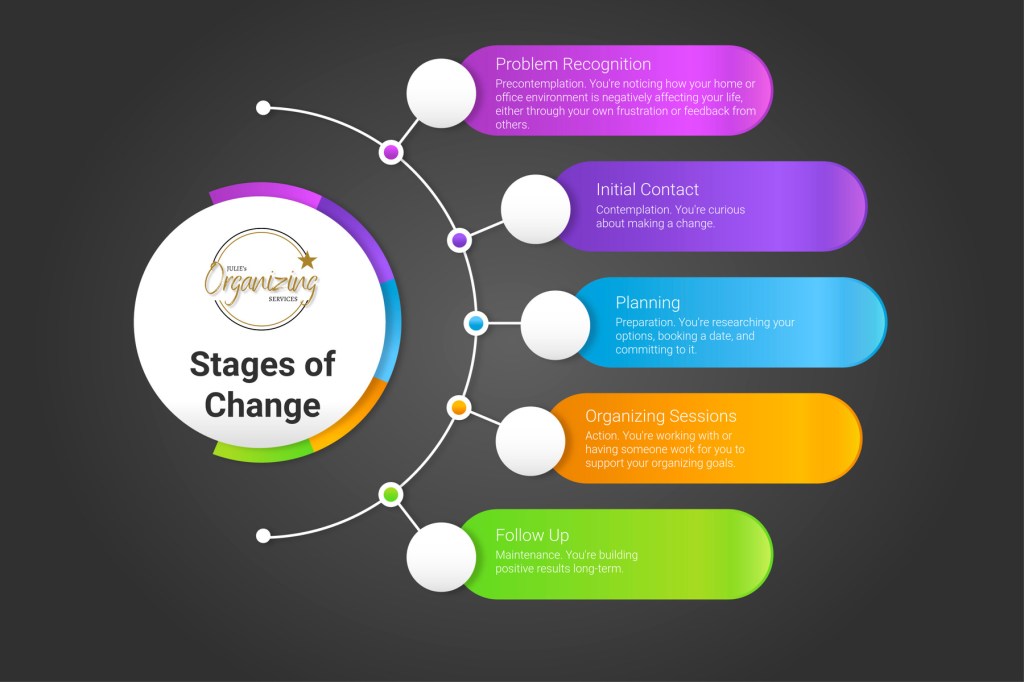
Let’s explore how the TTM works when you connect with a professional organizer:
- Problem Recognition (Precomtemplation): You’re noticing how your home or office environment is negatively affecting your life, either through your own frustration or feedback from others.
- Initial Contact (Contemplation): You might be just curious about organizing services or starting to realize you need help. A good organizer understands this. They’ll gently highlight the benefits of getting organized (more time, less stress) and address your initial questions and concerns without any pressure to commit. They’re raising awareness and helping you see the possibilities.
- Planning (Preparation): You and the organizer create a realistic plan together. This plan breaks down the overwhelming task into manageable steps, boosting your Self-Efficacy – your belief in your ability to succeed. Your session is booked and you welcome the support.
- Organizing Sessions (Action): This is where the hands-on work happens! The organizer offers support, guidance, and teaches practical organizing skills like sorting, categorizing, and creating storage solutions. Whether you’re actively participating or guiding the organizer’s work with your input, each step forward builds your confidence and momentum towards a successful outcome.
- Follow-up & Maintenance: The organizer doesn’t just leave you hanging. They offer strategies to maintain your progress and build long-term organized habits. This strengthens your Self-Efficacy even further and helps prevent “relapse” into old, cluttered ways.
Why This Matters When Choosing an Organizer
A skilled and ethical organizer understands that change is a process. They won’t pressure you or use a one-size-fits-all approach. Instead, they’ll tailor their methods to your current Stage of Change, utilizing the right Processes of Change to help you tip the Decisional Balance in favor of organization and build lasting Self-Efficacy.
Key Takeaways:
- Stages of Change: Recognize that getting organized is a journey, not a quick fix.
- Processes of Change: Learn and use effective techniques for decluttering and organizing.
- Decisional Balance: Weigh the pros and cons to stay motivated.
- Self-Efficacy: Cultivate belief in your capacity to achieve and sustain an organized life, regardless of whether you choose a professional assessment, a DIY approach, in-person assistance, or virtual guidance.
Here’s how relapse fits within the TTM
The TTM acknowledges that relapse is a common and often normal part of making significant behavioral changes. It’s viewed as a “recycling” of stages rather than a complete failure. Individuals may cycle through the stages multiple times before achieving long-term maintenance.
Relapse can happen after someone has been in the Action stage (actively making changes) or even the Maintenance stage (sustaining changes).
Relapses are often triggered by various factors, including stress, emotional distress, social pressures, or exposure to cues associated with previous behaviors.
Importantly, when a relapse occurs, individuals don’t always return all the way back to the Precontemplation stage. Many find themselves back in Contemplation or Preparation, having learned something from their experience and potentially more motivated to try again.
The TTM emphasizes that relapse can be a learning opportunity. By analyzing the triggers and circumstances surrounding the relapse, individuals can develop stronger coping strategies and adjust their action plans for future attempts.
Experiencing a relapse can temporarily decrease self-efficacy (confidence in one’s ability to change). However, how the individual responds to the relapse significantly impacts their future progress. Viewing it as a setback rather than a complete failure can help rebuild self-efficacy.
When working with an organizer, understanding the possibility of relapse is crucial. The organizer can help you develop relapse prevention strategies during the Action and Maintenance stages, identify potential triggers, and create coping mechanisms. If a relapse does occur, the organizer can provide support and help you re-engage with the change process at the appropriate stage.
By understanding the TTM, both you and your organizer can work together more effectively, leading to a more organized, less stressful, and more fulfilling life.
Ready to take the next step? Email me at juliesorganizingservices@gmail.com or call 902-209-7034 to get started.
 Trained Professional Organizer & ADHD Specialist