As a professional organizer specializing in ADHD, one of the most common things I hear from clients is how hard it is to truly relax. Even when they stop “doing,” they don’t feel rested and I relate to that. We can often identify internally, something feels “off”. In this article, I explore ADHD symptoms, modern studies behind rest and sleep, and practical organizing solutions.
First of all, I highly recommend having a free at-home sleep study to get a clinical idea of how well you’re sleeping. My results through The Breath Company showed that I was breathing normally, getting enough hours of sleep, and reaching a typical amount of REM overall but my REM sleep was fragmented. So even though most nights I was getting “enough” sleep on paper, I was still feeling fatigued. But why?
That sent me down a rabbit hole. What I learned is that improving REM sleep often comes down to a few simple (but not easy) things: fewer interruptions, less stimulation, and more consistent routines.
Then a client shared Sacred Rest by Dr. Saundra Dalton-Smith, and it really clicked. It reframed rest as something much bigger than sleep – about recharging the whole person.
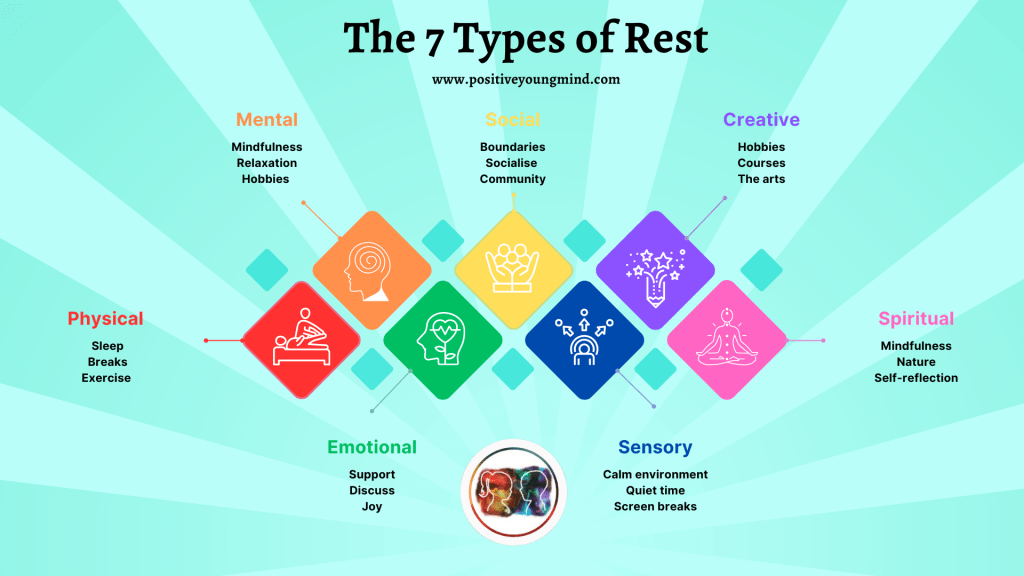
She explains that we need seven different types of rest to truly recharge: physical, mental, sensory, emotional, social, creative, and spiritual.
Around the same time, I watched Don’t Die, where Bryan Johnson shares how prioritizing high-quality sleep transformed his health and energy. It reinforced something important: sleep matters, but it’s not the whole story.
When you start to look at rest this way, especially with ADHD, everything begins to make more sense. It’s not about trying harder. It’s about reducing the noise, the friction, and the constant demands on your brain. And that’s where your environment comes in which is exactly what I specialize in as a professional organizer and owner of Julie’s Organizing Services.
Mental Rest: When Your Brain Won’t “Shut Off”
Mental rest is about stepping away from constant thinking, learning, planning, processing, and decision-making. It means giving your brain a break from the ongoing problem-solving and mental load of everyday life. Even when you’re “doing nothing,” your brain is still working.
It’s about stepping out of the “doing” and into “being,” so you can feel recharged and ready to return to your tasks.
How this may affect your ADHD brain:
- switching tasks
- making micro-decisions
- managing distractions
Simple ways to support mental rest include taking screen-free breaks, practicing mindful breathing, going for gratitude walks, or spending time in nature.
When mental rest is overlooked, it can lead to cognitive fatigue, brain fog, poor decision-making, irritability, and increased stress.
Organizing solutions:
- create simple, repeatable systems to reduce decision-making
- use labeled zones so you don’t have to think about where things go
- keep everyday items easily accessible to minimize mental load
Sensory Rest: The Hidden Impact of Clutter
Sensory rest is about reducing the overwhelming input your brain processes throughout the day. This includes bright screens, loud noises, flashing lights, notifications, and strong scents.
A group of items taking up space in a disorganized way can contribute to sensory overload.
How this may affect your ADHD brain:
- artificial blue lighting
- unpleasant noises and smells
- visual clutter
By dimming lights, reducing background noise, using accessibly modes on your phone for focus (limited access and notifications) and sleep (red light colour coding), using essential oils, listening to calming frequencies (like bird chirping) and music, and decluttering your space, you allow your nervous system to settle. This helps prevent irritability, difficulty concentrating, anxiety, and the feeling of being constantly “on edge.”
Organizing solutions:
- reduce visual clutter by editing down what’s out in the open (including digitally)
- group similar items together to reduce visual noise
- use hidden storage with clean storage solutions behind it to create calmer visual environments
Emotional Rest: Letting Go of Shame
Emotional rest is about releasing internal pressure, guilt, and the emotional weight you carry. When your environment supports you, that weight begins to lift.
How this may affect your ADHD brain:
- guilt about not doing things “right”
- overwhelm and anxiety tied to past, present, and future
- pressure to stay on top of everything
- replaying conversations and second-guessing yourself
- self-doubt shaped by past experiences
Emotional rest helps restore the energy spent regulating and responding to emotions. Practices like grounding, mindfulness, journaling, emotional check-ins, and setting healthy boundaries support emotional balance.
Without it, emotional dysregulation can show up as mood swings, impulsiveness, avoidance, misunderstandings, and vulnerability fatigue.
Organizing solutions:
- create systems that support how you actually function, not how you “should”
- simplify spaces and tasks to reduce overwhelm and feelings of failure
- build in “good enough” organizing instead of perfection-based systems
Social Rest: A Space to Recharge
Social rest is about having space where you don’t have to perform, respond, or be on guard around others. It’s also about being intentional with who you spend time with.
How this may affect your ADHD brain:
- masking or mirroring to feel accepted
- fear of rejection or being misunderstood
- sensitivity to perceived demands
- overthinking, people-pleasing, avoidance, or negative reactive responses
Social rest helps prevent burnout from constantly managing social expectations. It may involve limiting draining interactions, taking social media breaks, spending more time in supportive relationships, learning and practicing effective communication skills, or simply being alone without pressure to engage.
Organizing solutions:
- create and practice healthy boundaries in your schedule
- design spaces in your home or at work where you can be alone and decompress
- organize commitments and obligations in a way that feels realistic and manageable
Creative Rest: Making Room for Inspiration
Creative rest is about allowing your mind to experience beauty and inspiration without pressure to produce or achieve.
How this may affect your ADHD brain:
- constant visual input competing for attention
- clutter blocking focus and creative flow
- feeling mentally drained or uninspired
When your environment is simplified, your creativity and appreciation for others creativity has space to return. Creative rest might look like walking without a destination, reading poetry, visiting a museum, garden nursery or art gallery, taking photos, drawing freely, viewing other people’s creative projects or simply daydreaming.
It restores your ability to think flexibly, brainstorm, and feel gratitude and inspiration again.
Organizing solutions:
- clear surfaces to create space for thinking and creativity
- keep only inspiring or meaningful items visible
- create a dedicated, low-pressure space for creative activities
Physical Rest: Supporting Your Energy
Physical rest is about restoring your body through both stillness and movement, while reducing unnecessary physical strain in your daily life.
How this may affect your ADHD brain:
- restlessness or difficulty slowing down
- inconsistent energy levels
- physical effort required to manage your space
- muscle tension or fatigue
A space that’s difficult to navigate (especially if you already have limited mobility) adds to your physical load. Simple, accessible systems can reduce effort, keep you safe, and support your energy.
Physical rest includes:
- Passive rest: sleeping, lying down, sitting still
- Active rest: gentle movement like walking, stretching, yoga, and strength training
Both are essential for recovery and overall well-being.
Organizing solutions:
- arrange your space to reduce unnecessary movement and effort
- store frequently used items within easy reach
- create systems that are easy to maintain to conserve energy
Spiritual Rest: A Sense of Calm
Spiritual rest is about feeling grounded, connected, and at peace, especially when life feels overwhelming or out of control.
It may involve connecting to something greater than yourself through prayer, meditation, time in nature, or community. It’s whatever brings you meaning and a sense of calm.
How this may affect your ADHD brain:
- difficulty “switching off”
- constant mental or environmental noise
- lack of grounding tools or spaces
- difficulty with acceptance (which doesn’t have to equal approval)
When your environment feels busy, unsettled, or fearful it becomes harder to feel at ease. Prioritizing a healthy spiritual practice of well-being can support resilience and help buffer stress and anxiety.
The more intentional you are with this type of rest, the easier it becomes to reset, feel centered, and reconnect with yourself and your purpose.
Organizing solutions:
- create a calm, clutter-free space for reflection or quiet time
- incorporate meaningful items that support grounding and connection
- reduce environmental noise and distractions to support stillness
A Note on Sleep: What Bryan Johnson Teaches Us
His research highlights something important: sleep isn’t just helpful it’s essential.
Sleep impacts:
- brain function and decision-making
- immune health
- emotional regulation
- overall longevity
Even one night of poor sleep can significantly affect cognitive performance, mood, and the body’s ability to recover.
His biggest takeaway is simple but powerful:
If you only do one thing for your health prioritize sleep.
What’s especially relevant to ADHD is how he approaches it through the process of personal protocols:
- creating a consistent wind-down routine
- reducing light and stimulation in the evening
- increasing exposure to day light in the morning
- keeping a cool, calm, clutter-free sleep environment
- maintaining consistent sleep and wake times
This is where your home environment plays a direct role.
A cluttered, overstimulating bedroom makes it harder for your brain to transition into rest. A clean, calm, organized space signals safety, routine, and predictability, all things the ADHD brain benefits from.
The Takeaway: Organization as a Form of Rest
For ADHD, rest isn’t just about sleep it’s about reducing friction in your everyday life. A well-designed space with supportive daily practices doesn’t just look good, it helps you feel better. It allows your life to support you, so rest becomes something you experience daily not something you have to chase.
 Trained Professional Organizer & ADHD Specialist